

Quick Facts at a Glance
| Detail | Info |
|---|---|
| Address | Cromwell Road, London SW7 5BD |
| Opening Hours | Daily 10:00 AM to 5:50 PM (last entry 5:30 PM) |
| General Admission | Free |
| Nearest Tube | South KensingtonSouth Kensington — District, Circle and Piccadilly lines |
| Tube Lines | District, Circle, and Piccadilly lines |
| Best Time to Visit | Weekday mornings, before 11:00 AM |
| Pre-booking | Recommended (free timed-entry ticket) |
| Family Friendly | Yes, excellent for children |
| Wheelchair Access | Full access available |
Why Visit Natural History Museum London
Some museums are impressive on paper but underwhelming in person. The Natural History Museum, London, is the opposite.
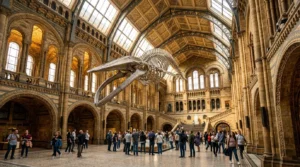
The second you step inside the Cromwell Road entrance and walk into Hintze Hall, you stop. You look up. Hanging right above you is Hope, a full blue whale skeleton that stretches the entire length of the hall. She is 25.2 meters long and completely takes your breath away.
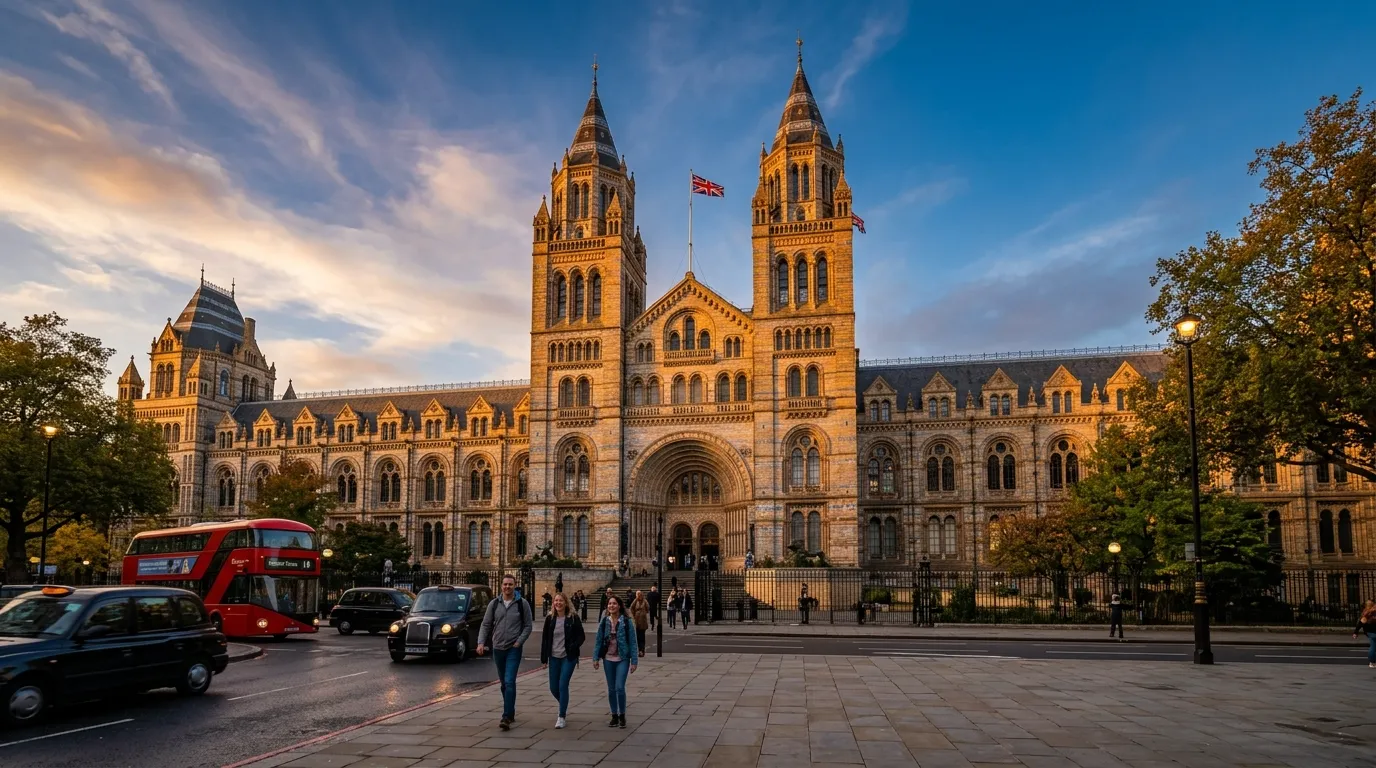
The building itself deserves just as much attention as the exhibits. Architect Alfred Waterhouse designed it in a Romanesque architectural style, with warm terra-cotta tiles covering every wall, arch, and column inside and out. The carved animals and plants in the stonework are not just decoration. They are part of the museum’s story about the natural world.
And none of this costs you a penny.
This is why the Natural History Museum London sits at the top of every first-time visitor guide to the city. Visit London, the city’s official tourism body, consistently ranks it among the top free attractions in the capital. Whether you are visiting London with kids, traveling solo, or simply ticking off the must-see landmarks in the UK, this place deserves a full half-day of your time. Planning your London trip? Use our free packing list generator to pack right for the weather.
Is Entry Really Free? Tickets Explained
Yes, general admission to the Natural History Museum London is completely free.
But this is where a lot of visitors make an expensive mistake with their time, not their money.
Even though entry costs nothing, you should still book a free timed-entry ticket online before you visit. This guarantees you an entry slot and means you walk straight in. During school holidays, bank holidays, and any busy weekend, long queues at the entrance are very real. Walk-up slots exist but are not guaranteed. On a peak Saturday in summer, some walk-in visitors have waited over an hour outside.
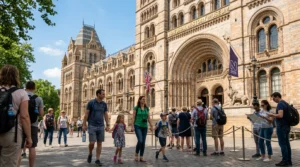
When you arrive, you will notice a board near the entrance suggesting a donation of around five or ten pounds. This is entirely voluntary. It supports the museum’s research and conservation work, but you are under no obligation to pay.
One more thing to know: some temporary exhibitions charge a separate admission fee. The Wildlife Photographer of the Year Exhibition, which runs annually, is one of the most popular paid shows and consistently worth the cost. Always check the museum website before your visit to see what is on.
How to book your free ticket: Head to the official Natural History Museum website and reserve a timed-entry slot. Takes two minutes. Saves you an hour of frustration.
How to Get There
The museum sits on Exhibition Road in South Kensington, right next to the Science Museum and the Victoria and Albert Museum, which most people call the V&A. The whole area is walkable and incredibly easy to navigate.
By Tube (Recommended)
South Kensington underground station is the closest stop. The District, Circle, and Piccadilly lines all stop here. From inside the station, follow the pedestrian subway tunnel that runs directly under the road and connects straight to Exhibition Road. You do not cross a single road. It takes about five minutes to walk through and comes out almost at the museum door.
South Kensington is the closest tube station to
the Natural History Museum London. It is served
by the District, Circle, and Piccadilly lines —
three of the busiest lines in the city, so you
will never wait long for a train.
From inside South Kensington station, follow
the signs for the pedestrian subway tunnel. This
covered walkway runs directly under Thurloe Place
and brings you out onto Exhibition Road — almost
at the museum entrance. You do not cross a single
road. The walk takes around five minutes.
If you are coming from central London, the
District or Circle line from Victoria, Paddington,
or Embankment will get you there directly. From
King’s Cross or Heathrow, take the Piccadilly
line straight to South Kensington — no changes
needed.
Plan your full journey using the official
Transport for London journey planner before
you leave your hotel.

You can plan your full tube journey using the official Transport for London journey planner before you leave your hotel.
By Bus
Buses 14, 74, 345, 360, and 414 stop on Cromwell Road directly outside the main entrance.
By Car
Do not drive. Parking in South Kensington is expensive and limited, and the area falls within the London Congestion Charge zone. The tube is genuinely easier.
If you are flying into London, check out this guide on how to find cheap flights to London from the USA before you book. Timing your flight right can save you hundreds of dollars.
What is Inside: Galleries and Zones
The museum is large. Without a basic plan, it is easy to spend an hour wandering and miss the best parts. It is split into four color-coded zones.
Green Zone
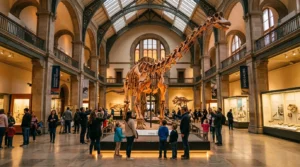
This is where you enter. It covers Hintze Hall with Hope the blue whale, the dinosaur galleries, the ecology section, and the creepy crawlies gallery. If you are visiting with children, plan to spend most of your time here. The Green Zone is where the real crowd energy is.
Blue Zone
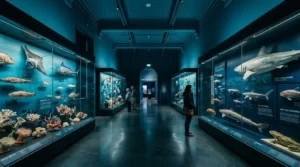
The Blue Zone is quieter. It covers marine life, human biology, and the fish and amphibian collections. A good place to head when the main halls feel crowded.
Red Zone
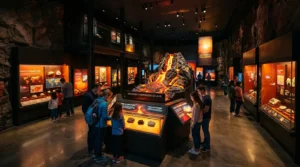
The Red Zone is home to the Earthquakes and Volcanoes Gallery, which includes a working earthquake simulator that recreates the 1995 Kobe earthquake. It rattles the floor and shakes the walls. Kids love it. Some adults do not expect how realistic it feels. The Red Zone also covers Earth’s history, gems, and minerals.
Orange Zone
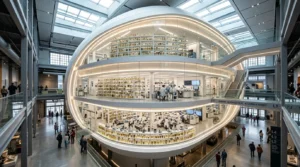
The Orange Zone leads to the Darwin Centre and the Cocoon, the museum’s modern science wing. Through large glass panels, you can watch real scientists at work on live research collections. The Cocoon holds over 17 million preserved insect and plant specimens stored in floor-to-ceiling jars. It looks like a science fiction film set.
The Charles Darwin Statue
On the grand staircase in Hintze Hall, you will find the seated statue of Charles Darwin. It is one of the most photographed spots in the museum. Darwin spent years working with the collections held here, and the statue is a quiet reminder of just how deep the scientific heritage of this place runs.
What About Dippy?
Dippy the Diplodocus, the famous dinosaur skeleton that used to greet visitors in Hintze Hall, is currently on a national tour across UK museums. Check the NHM website to see if he has returned by the time you visit.
Hidden Secrets Most Tourists Walk Past
Almost everyone visits the main hall and the dinosaur galleries. Very few people find these.
The Mineral Gallery
Tucked inside the Green Zone, this gallery is one of the most beautiful rooms in the building. The gem and mineral collection is genuinely spectacular, and because most visitors rush past it, it is almost always quiet. Take your time here.
The Spirit Collection
You can book a free guided tour of the Darwin Centre Cocoon, where tens of thousands of preserved specimens fill shelf after shelf. It is strange, fascinating, and completely unlike anything else in the museum.
The Wildlife Garden
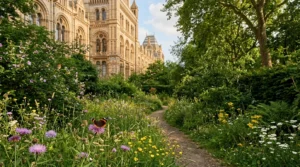
On the west side of the museum, there is a hidden urban nature reserve that most visitors never find. It is free to enter, peaceful, and surprisingly full of wildlife for a space sitting in the middle of London. On a warm day, this is the best-kept secret in the whole building.
Practical Visitor Tips You Actually Need
These are the things you only learn after you’ve visited.
- Book your free timed-entry ticket online at least two to three days ahead. During peak times and school holidays, book a week in advance.
- Wheeled suitcases are not allowed inside the museum. If you are moving between hotels on your visit day, store luggage at a nearby left-luggage facility first.
- All visitors go through a security check and bag screening at the entrance. Factor in five to ten minutes for this.
- Cloakroom facilities are available inside for bags, coats, and buggies. There is a small charge.
- Mobile signal is weak inside the building. Download the museum map from the NHM app before you arrive.
- Interactive exhibits like the earthquake simulator get very crowded after noon. Visit the Red Zone in the first hour after opening.
- The souvenir shop near the exit sells genuinely good science gifts, especially for children. Save it for the end so you don’t have to carry bags around.
- The museum has full wheelchair and stroller access, with lifts connecting all floors.
Before you travel, it is also worth reading about the most common travel scams targeting tourists in London and other major cities, so you are not caught off guard. And when packing, do not miss this useful list of things travelers forget to pack and later regret. Small things like a portable charger or a travel umbrella matter more than people expect. Planning your London trip? Use our free packing list generator to pack right for the weather.
Where to Eat Near the Museum
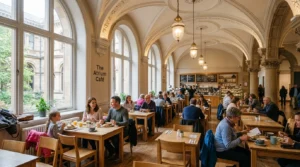
Inside the museum, the Waterhouse Cafe is the main dining option. There is also a dinosaur-themed cafe in the Green Zone that is popular with families. Prices are reasonable for central London. Expect to pay around eight to twelve pounds for a main meal.
The museum also has designated picnic areas. Bringing your own food is completely fine, and the outdoor courtyard behind the museum is a lovely spot to sit, especially on a clear day.
If you want more variety, South Kensington has plenty of independent cafes and restaurants within a five-minute walk. The Science Museum and V&A are also right next door, making this entire area one of the best cheap family days out London offers.
Frequently Asked Questions
What is the last entry time for Natural History Museum London?
The last entry to the Natural History Museum London is 5:30 PM. The museum closes at 5:50 PM. If you arrive after 5:00 PM, you will have very little time inside. For a proper visit, aim to arrive before 3:00 PM. On busy days, early morning arrival between 10:00 AM and 11:00 AM is strongly recommended.
Is Natural History Museum London free in 2026? Yes. General admission remains completely free. Some temporary exhibitions charge a separate fee. Check nhm.ac.uk for current exhibition details.
Do I need to book in advance? You do not have to, but it is strongly recommended. Free timed-entry tickets guarantee your slot. Walk-ins are possible, but queues can be very long on busy days.
How long does the Natural History Museum take? Most visitors spend two to three hours. To explore properly, including the Darwin Centre and quieter galleries, allow four hours or a full half-day. If you are visiting with children, plan for the longer end.
Does the Natural History Museum have lockers? The museum does not have self-service coin lockers. However, there is a staffed cloakroom near the main entrance where you can leave bags, coats, and buggies for a small charge. It is recommended for large backpacks and luggage. Do not arrive with a wheeled suitcase, as those are not permitted inside the galleries.
Which underground station is closest to the Natural History Museum? South Kensington is the closest underground station. It is served by the District, Circle, and Piccadilly lines. A pedestrian subway tunnel connects directly from the station to Exhibition Road. It is a five-minute walk, and you do not cross any roads.
Is it good for young children? Yes. It is one of the best family-friendly attractions in London. The dinosaur galleries, the earthquake simulator, and the interactive exhibits are genuinely engaging for children of all ages.
What is Hope at the Natural History Museum? Hope is the blue whale skeleton that hangs in Hintze Hall. She replaced Dippy the Diplodocus as the centerpiece of the main hall in 2017 and is 25.2 meters long.
What are the opening hours? The museum opens daily at 10:00 AM and closes at 5:50 PM. The last entry is at 5:30 PM. Bank holiday opening hours may vary slightly, so always check ahead.
Are there any paid exhibitions worth booking? Yes. The Wildlife Photographer of the Year Exhibition runs annually and is genuinely outstanding. Book that separately if it is on during your visit.
Final Verdict
The Natural History Museum London is one of the few attractions in a major world city that consistently delivers more than it promises.
The architecture alone is worth the trip. The collections are extraordinary. Entry is free. And unlike so many big London tourist spots, it does not feel like a money-making machine once you are inside.
If you are in London for a few days, give it a full morning or afternoon. Book your timed entry in advance, arrive early, skip the gift shop until the end, and find the Wildlife Garden before you leave.
You will not leave disappointed.
Essential Travel Resources
Book your free museum ticket: Natural History Museum Official Site. Plan your tube journey: Transport for London – Official Journey Planner. Explore London attractions: Visit London – Official Tourism Site. Find cheap flights to London: Search Flights Here